
Original documents and scanned attachments are provided in Ukrainian.
Volunteer firefighting around the world
International overview • October 2026
Volunteer firefighters are an important part of public safety in many countries. They combine their main jobs with readiness to help their communities, undergo training and work alongside professional services.
Voluntary service does not mean a lack of support. Countries use compensation, employment protection, social benefits and tax incentives. Here are examples and ideas that may be useful to Ukrainian communities.
Volunteer firefighting in numbers
The figures refer to different years and membership categories. This is an overview of models, not a ranking: active volunteers, total membership and personnel of one service are different measures.

Germany
1 028 021
Active volunteers in 2023, with 23,760 volunteer fire departments. Youth fire organisations separately had 356,896 members.
Official source →
France
200 961
Volunteer firefighters at the end of 2025, around 78% of personnel. Provisional Interior Ministry figures.
Official source →
Austria
357 187
Total fire-service membership in 2025, including active personnel, reserves and youth. This is not a count of operational volunteers alone.
Official source →
Japan
732 223
Shobodan fire corps members as of 1 April 2025. Of these, 40,195 perform specialised roles; the average age is 44.5.
Official source →
Canada
91 685
Estimated volunteers in 2025: 73% of the country’s firefighters, according to the Canadian Association of Fire Chiefs census.
Official source →
Australia • New South Wales
69 624
NSW Rural Fire Service volunteers in the 2024/25 reporting period, across 1,999 brigades. This covers one service, not all of Australia.
Official source →
New Zealand
≈11 800
Fire and Emergency New Zealand volunteers in various roles, as reported by the service in June 2026.
Official source →
United States
52%
Share of volunteers among active firefighters in USFA-registered departments. Registry snapshot reviewed in October 2026; not a nationwide census.
Official source →
How volunteers are supported
Poland: communities and long-service benefits
The OSP model combines local support with state guarantees. From March 2026, the long-service benefit is PLN 288 per month for people meeting the applicable age and rescue-service requirements.
Germany: protection of the main job
Bavarian law provides release from work for service and training with continued pay. This is a regional example: the rules must be checked for the relevant federal state.
France: compensation and social protection
Volunteers receive tax-exempt hourly allowances. A specific benefit is available after service subject to qualifying conditions. Current rates and eligibility rules are published on the government’s Service Public portal.
Canada: a tax incentive
For the 2025 tax year, eligible volunteers can claim CAD 6,000 for a tax credit with at least 200 hours of service. This is not a CAD 6,000 cash payment; the actual saving depends on tax rules.
United Kingdom: the on-call model
On-call firefighters combine a main job with paid availability for incidents. This is a part-time employment model, not unpaid volunteering. Cambridgeshire Fire and Rescue Service publishes an example of the arrangements.
Ideas worth exploring for Ukraine
International experience provides a basis for discussion and proposals. These are potential areas for development, not claims that corresponding guarantees are absent from Ukrainian law.
- Compensation for actual call-outs, duty periods and training.
- Protection of volunteers’ employment rights and clear arrangements with employers.
- Life and health insurance, with support in the event of injury.
- Social and tax incentives for active and long service.
- Equipment, practical training and youth programmes.
- Sustained community support and coordination with professional services.
Developing volunteer firefighting together
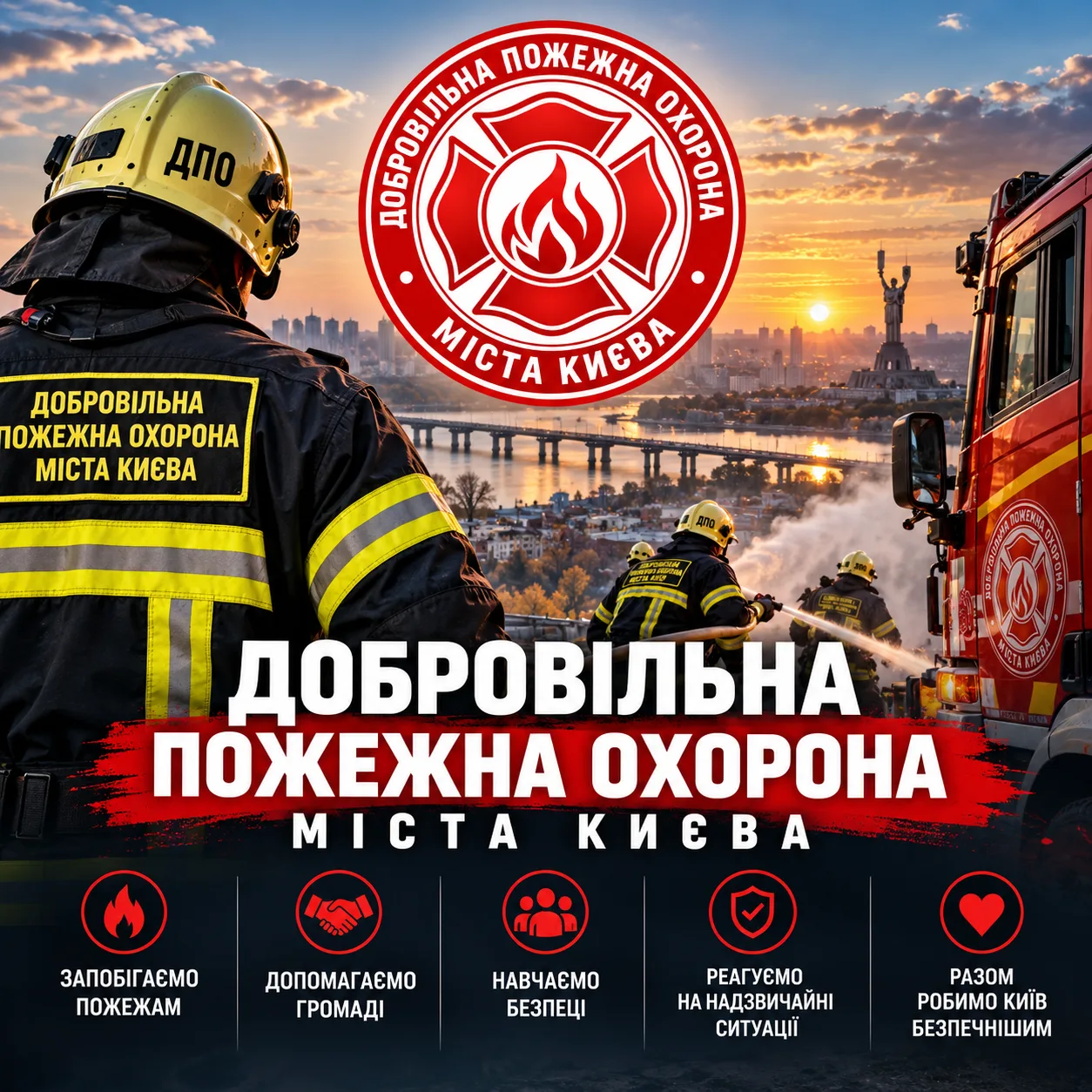
Kyiv Volunteer Fire Service welcomes exchanges of experience, training initiatives and international cooperation. Learn about our team, volunteer training and partnership opportunities.
Sources and currency
Prepared in October 2026. Each statistic has its own reference year. Benefit rules and guarantees may change: consult the current official source when applying a specific provision.
CTIF international fire statistics →